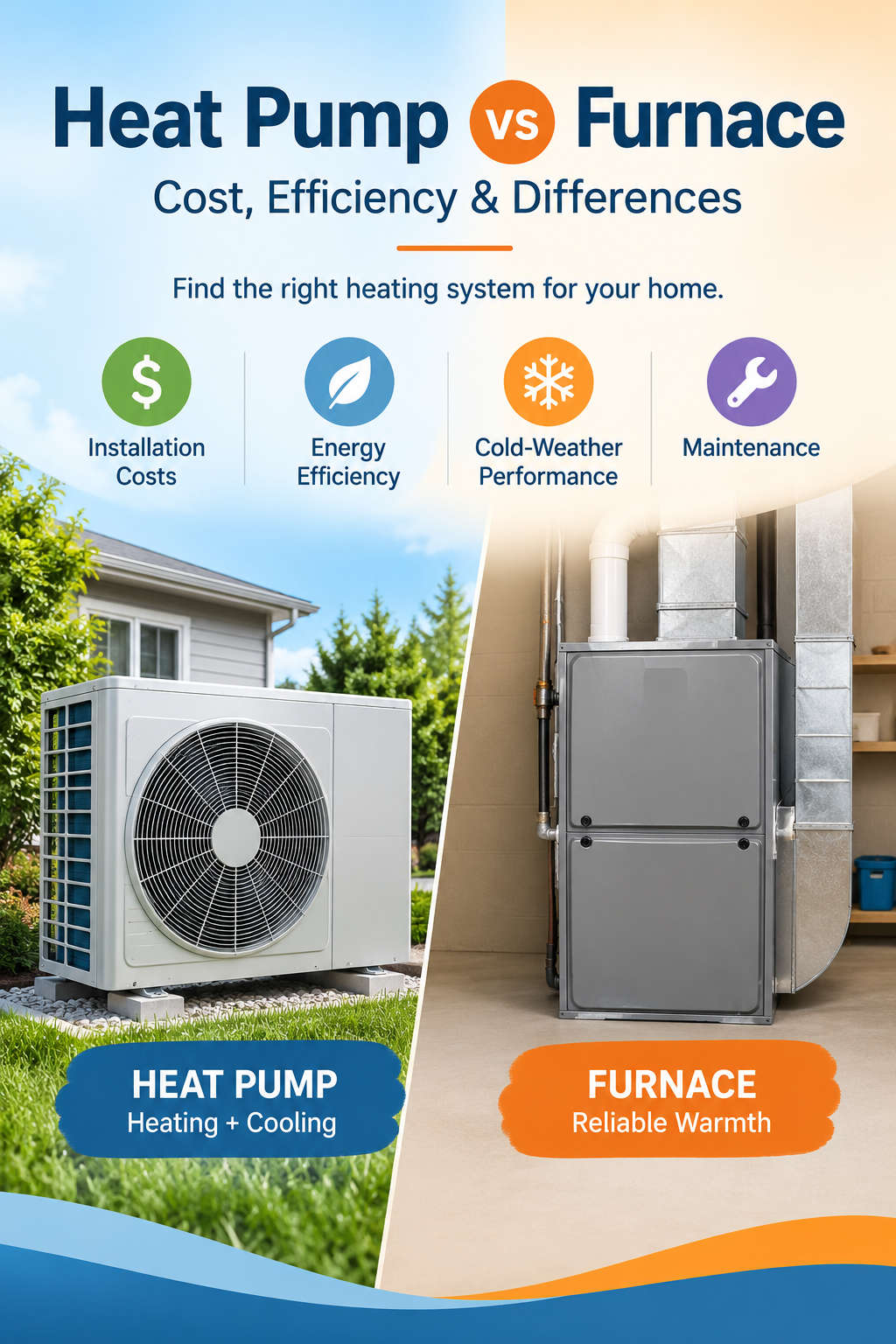
Choosing between a heat pump and a furnace can affect your energy bills, indoor comfort, and long-term home maintenance costs. Both systems can keep your home warm, but they produce heat differently and perform best under different conditions.
A heat pump moves heat between the outdoors and your home, using electricity to power the process. A furnace generates heat by burning fuel or using electric resistance. Heat pumps can also provide air conditioning, while conventional furnaces need a separate cooling system.
So, which option is right for your home?
The answer depends on your climate, local energy prices, installation budget, and existing HVAC equipment. In this guide, you’ll learn how heat pumps and furnaces compare in terms of efficiency, operating costs, cold-weather performance, maintenance, and comfort. You’ll also discover what to check before replacing your current heating system.
Heat Pump vs Furnace: What Is the Difference?
The main difference between a heat pump and a furnace is how each system supplies heat. A heat pump transfers available heat from one place to another, while a furnace generates heat directly.
This difference affects energy use, performance in cold weather, and whether you need separate equipment for cooling.
How a Heat Pump Works
A heat pump uses electricity, refrigerant, a compressor, and heat exchangers to move heat. During winter, it collects heat from outdoor air and transfers it inside. Even cold outdoor air contains some thermal energy that a suitable heat pump can use.
When summer arrives, the system reverses the process. It removes heat from your home and releases it outdoors, functioning much like a central air conditioner.
Because it moves heat instead of generating all of it from scratch, a heat pump can deliver more heat energy than the electrical energy it consumes under suitable conditions.
Air-source heat pumps are common in residential homes. Ducted models distribute conditioned air through existing ductwork, while ductless mini-splits deliver heating and cooling to individual rooms or zones.
How a Furnace Works
A furnace heats your home by generating warmth and distributing it through vents. Most residential furnaces use natural gas, propane, or heating oil, although electric furnaces are also available.
In a gas furnace, a burner heats a metal heat exchanger. A blower moves indoor air across the exchanger, then circulates the warmed air through the home’s ductwork.
Unlike a heat pump, a conventional furnace provides heating only. Homeowners who need cooling must use a separate air conditioner.
A furnace’s efficiency depends on its design and fuel type. Gas models are commonly rated using Annual Fuel Utilization Efficiency (AFUE). A furnace with a 95% AFUE rating converts about 95% of the fuel’s annual energy content into useful heat.
Heat Pump vs Furnace: Main Differences at a Glance
Both systems can provide reliable heating when correctly selected and installed. However, their differences may make one a better fit for your home.
| Feature | Heat Pump | Furnace |
|---|---|---|
| Energy source | Electricity | Gas, propane, oil, or electricity |
| Heating method | Transfers heat | Generates heat |
| Cooling | Usually included | Requires separate equipment |
| Energy efficiency | Often very high | Depends on fuel type and efficiency rating |
| Cold-weather performance | Varies by model and outdoor temperature | Gas models generally provide strong heat in severe cold |
| Initial cost | May be higher when converting an existing system | Often lower for a like-for-like replacement |
| Maintenance | Indoor and outdoor components, coils, and refrigerant system | Filters, blower, burner, and combustion components where applicable |
| Environmental impact | No on-site fuel combustion during normal operation for an electric model | Combustion models produce on-site emissions |
| Best suited for | Efficient year-round heating and cooling | Homes needing a straightforward heating replacement |
These differences are a useful starting point, but they don’t determine the winner on their own. Energy prices, local weather, installation requirements, and the condition of your home’s insulation can change the overall value of either system.
Heat Pump vs Furnace: Which Is More Energy-Efficient?
Energy efficiency is one of the strongest reasons to consider a heat pump. However, it is important to compare efficiency and running costs separately.
Heat Pump Efficiency
A heat pump can deliver two or three units of heat for every unit of electricity it uses, depending on its design and operating conditions. This makes it particularly efficient compared with electric resistance heating.
Its efficiency generally declines as outdoor temperatures fall because extracting heat becomes more difficult. Cold-climate models are designed to maintain useful heating capacity in lower temperatures, although performance still varies by model.
Heat pumps can be especially attractive in moderate climates and in homes that currently rely on electric baseboard heaters or other resistance-based heating.
Furnace Efficiency
A furnace’s efficiency depends on its fuel and equipment rating. Many gas furnaces have AFUE ratings ranging from around 80% to 98% or higher.
A high-efficiency furnace can use less fuel than an older model to provide a similar amount of heat. However, its operating cost still depends on gas or other fuel prices.
Electric furnaces use resistance heating, so they generally consume more electricity to produce the same amount of heat than an efficient heat pump would under suitable conditions.
Which System Uses Less Energy?
A heat pump often uses less purchased energy to provide the same amount of heat. Yet the most energy-efficient option is not always the cheapest to operate.
For example, inexpensive natural gas may make a high-efficiency gas furnace competitive with a heat pump in some areas. Where electricity rates are lower or gas prices are high, the heat pump may offer greater savings.
Compare the equipment’s seasonal performance, local utility rates, and your home’s expected heating demand before making a decision.
Heat Pump vs Furnace: Installation Costs
The upfront cost depends on the equipment, the home’s layout, existing connections, and the amount of work required.
Heat Pump Installation Costs
Installing a heat pump may require an outdoor unit, an indoor air handler, refrigerant lines, electrical work, and a compatible thermostat. Ductwork repairs or upgrades may also be necessary.
The price can be higher if you’re converting from a furnace-only setup because additional cooling and electrical components may be required. However, if your existing air conditioner also needs replacing, one heat pump may cover both heating and cooling needs.
Ductless mini-splits can be useful for homes without suitable ductwork or for additions where extending existing ducts would be difficult.
Furnace Installation Costs
Replacing an existing furnace can be simpler when the home already has compatible ductwork, fuel connections, and ventilation.
Costs can increase if you choose a more efficient model, change fuel types, or need improvements to the exhaust system or ductwork. You’ll also need to account for a separate air conditioner if your current cooling equipment requires replacement.
Which Is Cheaper to Install?
A furnace may cost less upfront when you’re replacing an existing furnace and keeping a working air conditioner. A heat pump may offer better overall value when both systems need replacing.
Request itemized quotes for complete installations. Comparing the price of a furnace alone with the price of a heat pump that also provides cooling won’t give you a fair comparison.
Heat Pump vs Furnace: Which Costs Less to Run?
Your monthly energy bills depend on the system’s efficiency, local energy rates, and how much heating your home requires.
A heat pump may reduce operating costs because it transfers heat efficiently. However, a gas furnace can be cheaper to run in areas where natural gas is inexpensive relative to electricity.
Very cold weather can also increase heat pump electricity use, especially when backup electric resistance heating is activated.
To compare the options accurately, ask an HVAC contractor to estimate annual heating costs using your local electricity and fuel prices. Include maintenance expenses and expected cooling costs where relevant.
Consider the total cost of ownership rather than focusing only on your first energy bill. Installation, routine service, repairs, and future replacement costs all affect long-term value.
Is a Heat Pump or Furnace Better in Cold Weather?
Cold-weather performance is a common concern when comparing these systems. Traditional heat pumps generally lose efficiency as the outdoor temperature drops, but modern cold-climate models can operate effectively in freezing conditions.
Heat Pump Performance in Winter
A correctly sized cold-climate heat pump can provide reliable heating in many cold regions. However, you should check its heating capacity at low outdoor temperatures rather than relying only on its advertised capacity under milder conditions.
Heat pumps may also run a defrost cycle to remove frost from the outdoor coil. During this process, you might notice a temporary change in operation. This is normal when the system is working as designed.
If the system repeatedly struggles to maintain your thermostat setting, check the air filter and make sure the outdoor unit is not blocked by leaves, snow, or other debris. Restricted airflow can reduce performance. If the problem continues, a technician should check the equipment’s capacity, refrigerant system, controls, and backup heating.
Furnace Performance in Winter
Gas and oil furnaces can provide strong heating output even when outdoor temperatures are very low. This makes them appealing in regions with long, severe winters.
However, furnaces can still lose performance because of clogged filters, faulty ignition components, blocked exhaust vents, or other maintenance problems.
If your furnace blows cool air or frequently shuts off, check the filter first because restricted airflow can cause overheating and trigger a safety shutdown. If the issue persists, arrange a professional inspection instead of attempting repairs to gas or combustion components yourself.
Which Is Best for a Cold Climate?
A furnace may be the simplest option where winters are severe and natural gas is affordable. A properly selected cold-climate heat pump can also work well, particularly when backed by a suitable supplemental heating system.
A dual-fuel setup combines both technologies, using the heat pump when conditions favor it and the furnace when additional heating is more practical.
Heat Pump vs Furnace: Comfort and Indoor Temperature
Both systems can maintain a comfortable home, but the way they deliver warmth feels different.
Heat pumps often run for longer periods at lower output, helping maintain a relatively steady indoor temperature. The air coming from their vents may feel less hot than furnace air, even when the heat pump is working normally.
Furnaces can deliver hotter airflow and may warm a room quickly during a heating cycle. Depending on the equipment and thermostat settings, this can create more noticeable temperature changes as the system switches on and off.
Neither system guarantees even heating in every room. Poor insulation, leaky ducts, restricted vents, and incorrectly sized equipment can all cause cold spots.
If one room remains noticeably colder than the rest, make sure its vents are open and unobstructed. This helps restore proper airflow. If the temperature difference continues, a professional can inspect the ductwork and assess whether the system is sized and balanced correctly.
Heat Pump vs Furnace: Maintenance Requirements
Regular maintenance helps either system run efficiently, reduces avoidable breakdowns, and supports a longer service life.
Heat Pump Maintenance
Check the air filter regularly and clean or replace it according to the manufacturer’s guidance. A dirty filter restricts airflow, making the system work harder.
Keep the outdoor unit free of leaves and debris. Good airflow allows the heat pump to transfer heat effectively. Schedule professional service to inspect coils, electrical connections, refrigerant components, condensate drainage, and operating performance.
Furnace Maintenance
Furnaces also need regular filter checks and professional inspections. A gas furnace requires attention to its burner, ignition system, heat exchanger, blower, safety controls, and exhaust ventilation.
These checks matter because faulty combustion or blocked venting can create safety risks. Never ignore unusual combustion odors, repeated shutdowns, or signs of exhaust problems.
Neither system is maintenance-free. The specific workload and cost depend on equipment design, usage, climate, and installation quality.
Heat Pump vs Furnace: Environmental Impact
An electric heat pump does not burn fuel inside the home during normal operation. Its overall emissions depend partly on how the electricity is generated, but its efficiency can make it a strong option for reducing household heating emissions.
A gas, propane, or oil furnace burns fuel and produces on-site combustion emissions. Its overall environmental impact also depends on fuel production, delivery, and the efficiency of the equipment.
For homeowners planning to use renewable electricity, a heat pump can support a transition away from direct fossil-fuel heating. Still, local electricity generation and the home’s heating demand matter when comparing total emissions.
How to Choose the Right Heating System
The best choice comes down to your home’s needs rather than a universal rule.
Choose a heat pump if you want heating and cooling in one system, use electric resistance heating now, or need to replace an aging air conditioner as well as your heating equipment. If winters are cold, prioritize a model rated for your local conditions.
Consider a furnace if you’re replacing an existing gas furnace, your air conditioner still works well, or your area has very cold winters and affordable natural gas.
A dual-fuel system may suit homes that need efficient heating during milder weather and dependable supplemental heat during colder periods. Its added installation and maintenance costs should be weighed against potential operating savings.
Before buying either system, ask for a professional heating and cooling load calculation. Equipment that is too large or too small can waste energy and reduce comfort. Also review insulation, air leaks, duct condition, utility rates, warranty terms, and current local incentives.
Frequently Asked Questions
Is a heat pump cheaper to run than a gas furnace?
It can be, but not everywhere. A heat pump’s efficiency may lower energy use, while inexpensive natural gas can make a furnace competitive. Local energy prices and equipment performance determine the actual cost.
Can a heat pump replace a furnace completely?
Yes. A properly sized heat pump can provide a home’s full heating demand in many climates. In colder areas, the right model and an appropriate backup plan may be necessary.
Does a heat pump work below freezing?
Yes. Many models operate below freezing, and cold-climate versions are designed for lower temperatures. Heating capacity and efficiency vary by model, so check the manufacturer’s low-temperature performance data.
Does a furnace heat a home faster?
A furnace often supplies hotter air, which can make a room feel warmer quickly. A heat pump may run longer to maintain a steady temperature. Actual heating time depends on system capacity and the home’s insulation.
Should I replace my furnace with a heat pump?
Consider switching if you need new heating and cooling equipment, want to move away from direct fuel combustion, or currently use electric resistance heating. Compare installation quotes and estimated annual costs before deciding.
How long do heat pumps and furnaces last?
Service life varies with equipment quality, maintenance, climate, and usage. If your system needs frequent repairs or struggles to maintain comfort, compare the repair cost with a replacement quote before investing in major work.
Final Verdict: Heat Pump vs Furnace
In the heat pump vs furnace comparison, a heat pump is often the better choice for efficient heating and cooling from one system. It can be especially attractive in moderate climates and homes that currently rely on electric resistance heating.
A furnace may be more practical when replacing existing equipment, particularly if your air conditioner is still in good condition or natural gas is relatively inexpensive. For homes facing very cold winters, a cold-climate heat pump or dual-fuel system may also be worth considering.
Before making a final decision, compare complete installation costs, local energy prices, cold-weather performance, and maintenance requirements. Have a qualified HVAC professional assess your home’s heating needs so the system you choose delivers dependable comfort without unnecessary energy use.