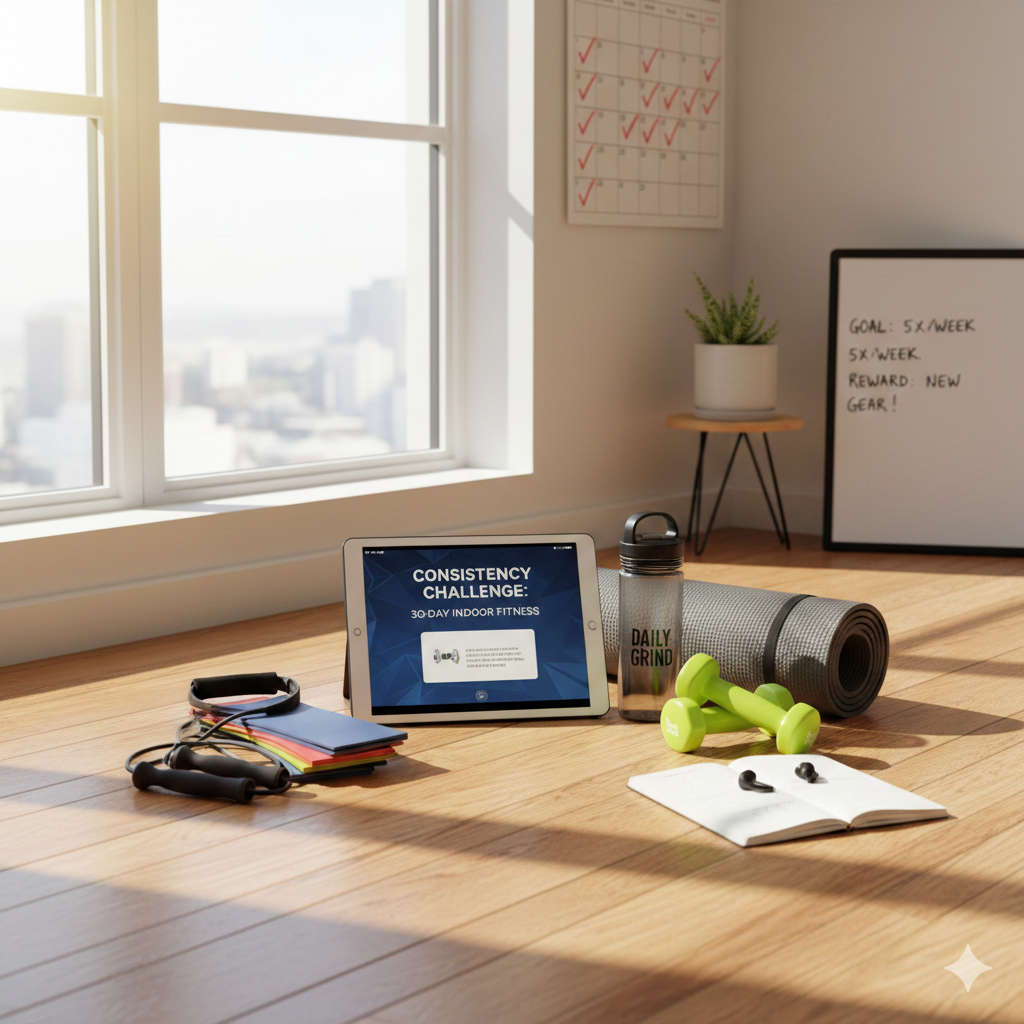
Staying consistent with indoor workouts should feel effortless in theory. You don’t have to leave your home, commute to a gym, wait for machines, or worry about bad weather. Yet most people quickly discover that indoor exercise routines can be surprisingly hard to maintain. The comforts of home often blur into distractions. Motivation dips without the structure of a gym environment. Some days, simply rolling out a mat feels like a monumental task.
But consistency is the real secret behind results—far more than intensity or complexity. Whether your goal is weight management, strength training, mobility, stress relief, or overall wellness, consistency creates lasting change. Indoor workouts can actually become your most dependable fitness habit once you understand how to build a routine that works with your lifestyle rather than against it.
The following guide walks through the mindset, structure, environment, psychology, and practical techniques that help you stay committed to indoor workouts for the long haul. You’ll find strategies for overcoming obstacles, improving accountability, designing effective routines, and making home workouts enjoyable instead of overwhelming. When approached the right way, indoor workouts can transform from a temporary effort into a sustainable lifestyle.
Why Consistency Matters More Than Anything Else
Many people assume fitness success comes from long, difficult, high-intensity sessions. But research and real-life experience both show that consistency has a far greater impact. Your body thrives on repeated, manageable effort rather than sporadic bursts of exhausting workouts.
When you exercise consistently, even at shorter durations, your muscles stay activated, your metabolism becomes more responsive, and your cardiovascular system steadily improves. Your body adapts to a routine more quickly because it receives the same signals over and over. Rest days are important, but keeping weekly momentum is even more valuable than pushing yourself harder during individual sessions.
Consistency also trains your mind. Repeated actions form habits. Habits reduce mental resistance. Over time, your workout becomes something you simply do—not something you must push yourself into every time. That shift is where true fitness transformation happens.
Indoor workouts play a powerful role here. They eliminate barriers like weather, transportation, time constraints, or social anxiety at the gym. The key is learning how to make home workouts easy to maintain and pleasant enough that you want to return to them regularly.
Strengthening Your “Why” Before You Build a Routine
It’s natural to begin a workout plan with goals like losing weight, gaining muscle, or improving overall health. Yet these goals are often vague and don’t provide lasting motivation. Consistency grows from a deeper sense of purpose—your personal reasons that go beyond surface-level aspirations.
Before committing to an indoor workout routine, take a moment to reflect on what you truly want. Maybe you want more energy so you can be fully present with your family. Maybe you want to feel stronger, both physically and emotionally. Perhaps you’re trying to ease stress, manage anxiety, or sleep better. Some people simply want to feel confident in their own body again.
Identifying a meaningful “why” acts as an anchor. When you’re tired or stressed or tempted to skip a session, returning to that deeper reason helps you stay on track. It turns your workout into something more purposeful than a task on your to-do list.
Remind yourself regularly of why you started. Write it down. Put it somewhere visible. Let it become part of your identity, not just a temporary intention.
Setting Goals That Support Long-Term Consistency
Once your purpose feels clear, the next step is to create goals that support your commitment rather than overwhelm you. One of the most common reasons people abandon home workouts is that they make their routine too demanding from the start. Ambitious goals can feel exciting at first but eventually become discouraging when life gets busy.
Sustainable goals are realistic, flexible, and specific enough to guide your actions. Instead of planning intense hour-long sessions, begin with shorter, achievable durations. Aim for frequency rather than perfection—four moderate workouts a week will outperform sporadic marathon sessions. Focus on building the habit first; progress can grow from that foundation.
You can gradually push yourself further once consistency is strong. You might increase your workout time, add resistance, or try new exercise styles. But in the beginning, choose goals that feel comfortable and manageable. Your mind and body will thank you.
Creating Indoor Workouts That Feel Simple, Structured, and Fun
A common advantage of indoor workouts is flexibility, but that same flexibility can become chaos without structure. Many people fail to stay consistent because they waste time figuring out what to do each session. A structured weekly plan removes decision fatigue and lowers the mental barrier to starting.
You don’t need complicated workout designs or tons of equipment. Even simple bodyweight routines can be highly effective if done consistently. Indoor workouts can include strength training, yoga, Pilates, dance cardio, resistance band circuits, or short high-intensity intervals. The best routine is the one you enjoy enough to repeat.
Aim to include a balance of strength, mobility, and cardio throughout the week. You might choose upper-body work one day, lower-body the next, then a cardio session, a yoga session, and a full-body strength day. If you’re new to working out, start with gentle movement and gradually increase intensity.
Tracking your progress adds structure and gives you something to look back on. Whether you use an app, a notebook, a whiteboard, or simply the notes app on your phone, recording your workouts helps you stay aware of your efforts. It also boosts motivation because it visibly confirms your consistency.
Designing a Home Environment That Supports Your Fitness Habit
Your environment influences your behavior more than you may realize. When it comes to indoor workouts, having a dedicated or semi-dedicated workout space can dramatically increase your consistency. If you must clear clutter every time you want to exercise, the inconvenience becomes a barrier. Similarly, if your equipment is hidden in a closet, you’ll be less likely to remember or feel motivated to use it.
Try transforming a corner of your home into a workout zone. This could be a corner of your living room, a space near your bed, or part of your office. Lay out a mat, organize your resistance bands, store your dumbbells neatly, or create a simple setup that feels inviting. The moment your brain recognizes this area as your fitness space, the transition into workout mode becomes smoother.
Minimizing distractions is another essential part of creating a workout-friendly environment. Turn off unnecessary notifications, close distracting apps, or play music that helps you focus. If you live with others, schedule workouts at times when you’re less likely to be interrupted. This small shift can greatly improve the quality and consistency of your indoor exercise routine.
Building a Pre-Workout Ritual That Signals Your Brain to Begin
Humans thrive on routines. A pre-workout ritual—no matter how small—acts as a psychological cue that it’s time to move. It could be as simple as filling a water bottle, changing clothes, turning on a specific playlist, or doing a few deep breaths and light stretches.
Over time, this ritual tells your brain, “We’re preparing to exercise now,” which reduces resistance. It becomes a bridge between your daily activities and your workout session. Without this kind of cue, the transition often feels abrupt and mentally tiring, especially when motivation is low.
You might experiment with different rituals: drinking a quick cup of coffee, putting your hair up, opening a fitness app, or rolling out your mat. The ritual doesn’t matter as much as the consistency behind it. Once it becomes familiar, it becomes a powerful tool for staying committed.
Keeping Workouts Manageable When Life Gets Busy
One of the biggest myths in fitness is that workouts need to be long to be beneficial. When people feel overwhelmed by the idea of an hour-long workout, they tend to skip sessions entirely. If you remove the pressure to perform long sessions, you instantly create a more consistent routine.
Short workouts can be immensely effective. Even eight to fifteen minutes of focused exercise can elevate your heart rate, strengthen your muscles, and boost your mood. On busy days, completing a short session maintains your habit and prevents the guilt of skipping.
Indoor workouts are naturally perfect for short intervals—quick mobility routines, short cardio bursts, and fast strength circuits fit easily into any schedule. The key is staying flexible. If you have time for a long session, great. If not, choose a short one without hesitation. The habit remains intact, and consistency continues.
Maintaining Motivation Through Enjoyment, Variety, and Creativity
Enjoyment is one of the most powerful motivators in fitness. If you dread your workouts, you’ll avoid them. But when you find exercise styles that truly engage you, consistency becomes almost automatic.
Indoor workouts offer endless variety. You can follow dance cardio videos, practice yoga flows, try Pilates, use resistance bands, experiment with strength training, or explore low-impact routines designed for apartments. Some people enjoy workout challenges, while others love guided video programs. The variety keeps things interesting and prevents boredom.
Changing your workout style every few weeks can revitalize motivation. If you spent the last month doing strength training, switch to yoga for a while. If you’ve been following intense HIIT routines, explore mobility-focused sessions next. Variety challenges your mind and body in new ways without sacrificing consistency.
The best workout routine is the one you enjoy enough to return to. Fitness should feel empowering, not punishing. Approach it with curiosity—and don’t be afraid to try new things until you find what feels right.
Using Accountability to Keep Yourself on Track
Accountability is often overlooked in indoor workouts because home exercise is such a private activity. But external reinforcement increases commitment and helps you stay disciplined. You can find accountability in a variety of ways, from sharing your goals with a friend to joining virtual fitness communities.
Some people enjoy taking online workout classes where instructors guide sessions in real time. Others benefit from sharing progress through text messages or group chats with friends pursuing fitness goals. If you prefer a more structured approach, hiring a virtual personal trainer or using a fitness app with built-in progress tracking can strengthen accountability.
The purpose of accountability is not to create pressure—it’s to build support. Knowing that someone else knows about your goals or will see your progress can gently motivate you to show up even when motivation is low. And if you prefer to keep things private, tracking your workouts for personal review also works well. The key is recognizing progress and feeling connected to your journey.
Rewarding Your Efforts Without Creating Dependency
Reward systems can help reinforce consistency, especially during the early stages of building a habit. When your brain associates your workout with something positive, the action becomes more appealing.
The reward doesn’t have to be extravagant. Treating yourself to a relaxing bath, wearing new workout clothes, enjoying your favorite music playlist, or watching a favorite show after your session can all work beautifully. These small celebrations make the routine feel satisfying, not burdensome.
As consistency strengthens, your body and mind begin to reward you naturally. Increased energy, improved mood, better sleep, and growing confidence all become internal motivators. But using small external rewards in the beginning is an excellent stepping stone toward building that deeper intrinsic motivation.
Recognizing Progress Beyond Physical Appearance
Many people lose motivation because they focus exclusively on physical changes that take time to appear. When results feel slow, it’s easy to believe your efforts aren’t working. But the benefits of consistent indoor workouts extend far beyond aesthetics.
You may notice you’re sleeping better, concentrating more easily, feeling calmer, or moving more comfortably throughout your day. You might recognize increased strength when lifting things around the house or improved mobility when bending or reaching.
These non-physical changes are often the first signs of progress—and acknowledging them helps sustain motivation. Celebrate these improvements. They reflect real, meaningful transformation long before the mirror shows it.
Using Psychological Techniques to Stay Consistent
Fitness is not just physical—it’s mental. A few simple psychological strategies can help you maintain consistency without constantly battling yourself.
One effective tool is the “five-minute rule.” Whenever you feel unmotivated, promise yourself you’ll start with just five minutes. Most of the time, once you begin, you’ll naturally continue. Starting is the hardest part, and this rule reduces the mental pressure significantly.
Another valuable strategy is lowering the barrier to entry. Keep your workout clothes in an easy-to-reach place. Save your favorite routines in a dedicated folder. Keep your mat unrolled if possible. The fewer hurdles between you and starting, the more likely you’ll begin.
Habit stacking also works well. Tie your workout to something you already do—stretch after waking up, exercise lightly before showering, or complete a short routine before dinner. The habit feels more natural when connected to an existing routine.
Positive self-talk also plays a major role. Instead of criticizing yourself for missing a day, focus on what you can do next. Encouraging thoughts create resilience, and resilience keeps you consistent.
Adapting Indoor Workouts for Any Living Situation
Indoor workouts are accessible to almost everyone because they can be adapted to different environments. If you live in a small apartment, compact exercise methods like Pilates, yoga, resistance band training, or low-impact cardio can be ideal. If noise is a concern, slow strength training, quiet HIIT routines, and isometric holds keep things respectful for neighbors.
When you live with family or children, time and space become more limited, but that doesn’t prevent consistency. Short sessions, split workouts, and early morning routines help you maintain momentum. Some parents even involve their kids, turning exercise into an enjoyable family activity.
If you’re new to fitness, treat your indoor workouts as a gentle introduction to movement. Begin with shorter sessions and build strength and confidence gradually. Your body adapts quickly when the routine is respectful rather than overwhelming.
Supporting Long-Term Sustainability Through Recovery and Reflection
Sustainability requires balance. Without rest, your body risks injury and burnout. With too much rest and not enough structure, your routine loses rhythm. Finding this balance ensures you can continue your indoor workouts for months and years.
Include recovery days that feel restorative rather than stagnant. Stretching, deep breathing, mobility sessions, and light yoga can nourish your muscles and mind without breaking your consistency. These days remind you that rest is part of progress.
Equally important is regular reflection. Every few weeks, take a moment to assess your routine. Notice what feels enjoyable, what feels difficult, and what needs adjustment. Your life shifts, and so should your workout routine. This flexibility prevents frustration and keeps your fitness journey aligned with your actual needs.
Final Thoughts: Turning Indoor Workouts into a Lasting Lifestyle
Indoor workouts have the potential to become one of the most reliable, convenient, and empowering forms of exercise in your life. They remove many of the barriers associated with traditional fitness routines and allow you to move in ways that feel personal, comfortable, and adaptable.
But consistency doesn’t magically happen. It grows from intention, clarity, enjoyment, and an environment built to support your goals. When you focus on realistic habits, meaningful purpose, enjoyable movement, and a flexible mindset, indoor workouts become much easier to maintain.
Ultimately, consistency isn’t built on perfection. It’s built on small actions repeated over time, forgiving yourself when life happens, and returning to your goals with a sense of commitment rather than pressure. Once you embrace this approach, indoor workouts can become a lifelong companion—supporting your physical health, mental clarity, and overall well-being in the most sustainable way possible.